
Extended Wear Contact Lenses: The Complete Guide
Extended wear contact lenses are the only type of contact lenses specifically designed to be slept in, offering a convenient alternative to removing your lenses every evening.
In this guide, we'll explain how extended wear contact lenses work, how long you can sleep in them, which lenses we recommend, and how to wear them safely.
What Are Extended Wear Contact Lenses?
Extended wear contact lenses, also known as continuous wear contact lenses, are designed to be worn for longer periods than conventional contact lenses, including overnight while you sleep. Depending on the lens and your optometrist's recommendation, some can be worn continuously for several nights, while others are approved for up to 30 nights.
Most modern extended wear lenses are made from silicone hydrogel, a material that allows more oxygen to reach the cornea than traditional hydrogel lenses. This is particularly important during sleep, when the eyes naturally receive less oxygen.
For people with demanding work schedules, frequent travel or lifestyles that make removing contact lenses every evening inconvenient, extended wear lenses can offer greater flexibility. They may be particularly useful for shift workers and emergency personnel, as well as people travelling long distances, camping or attending music festivals. Extended Wear lenses can reduce the need to handle lenses in environments where good hygiene is difficult to maintain. They can also help avoid accidentally sleeping in lenses that are not designed or prescribed for overnight wear.
However, being approved for overnight wear does not automatically mean a lens is suitable for everyone to sleep in. Your optometrist must assess your eyes and recommend an appropriate wearing schedule. Sleeping in contact lenses increases the risk of eye infections, even when the lenses are specifically designed for overnight wear.
Extended wear lenses can also be prescribed for daily wear, with removal and cleaning each evening. This allows wearers to benefit from the material and optical properties of these lenses without necessarily sleeping in them.
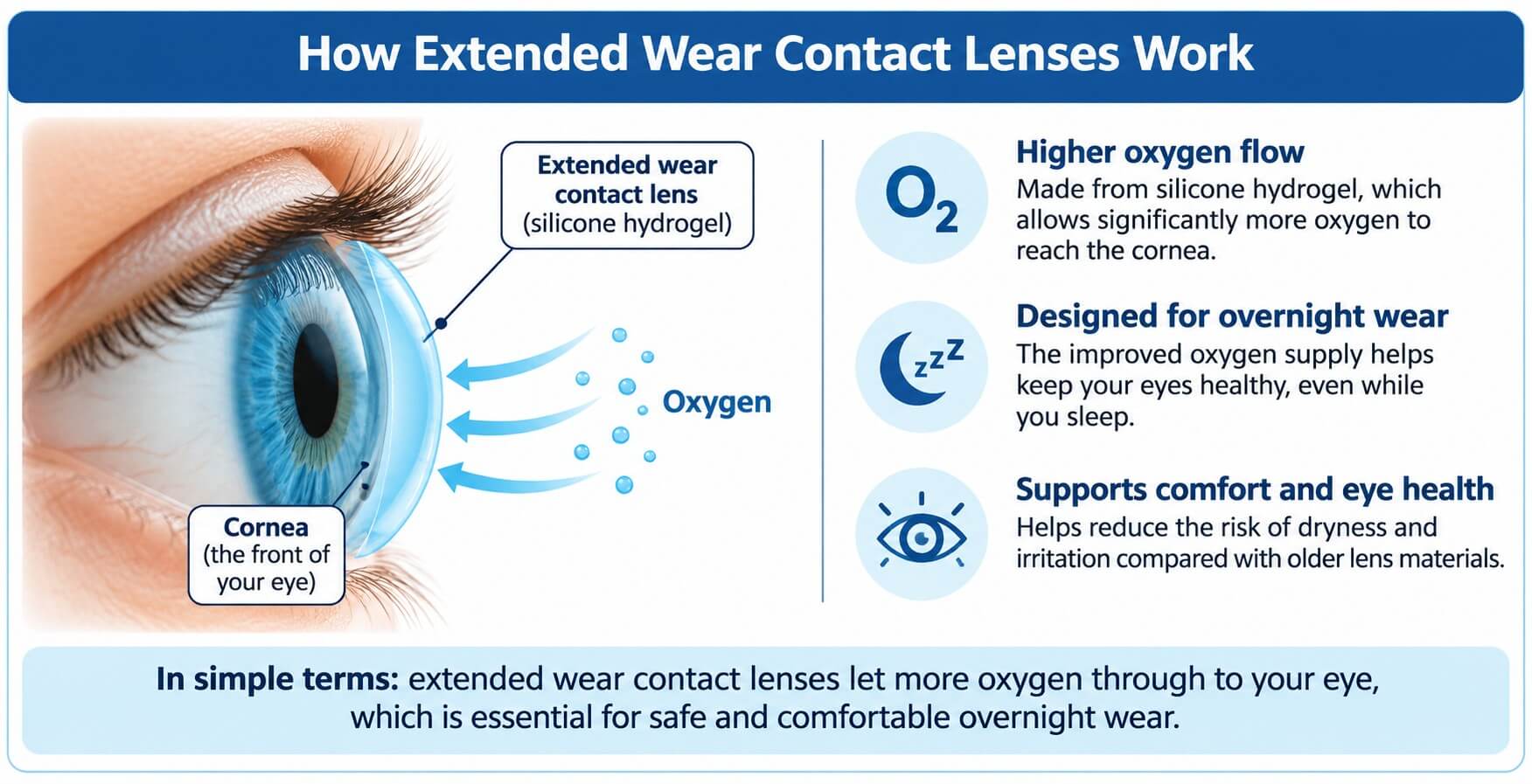
Can You Sleep in Contact Lenses?
Yes, you can sleep in certain contact lenses, provided they have been specifically approved for overnight wear and your optometrist has confirmed they are suitable for your eyes.
Extended wear contact lenses are designed to offer greater flexibility, allowing some wearers to keep their lenses in overnight or for long naps rather than removing them every evening.
How Long Can You Sleep in Contact Lenses?
The permitted wearing period depends on the particular lens and your optometrist's recommendation. Some extended wear lenses are approved for up to 6 nights and 7 days of continuous wear, while others may be approved for up to 30 nights.
However, these are maximum approved periods, not a recommendation that everyone should wear their lenses for that long. Your optometrist may recommend occasional overnight wear, a shorter continuous-wear schedule, or even removing your lenses every evening.
The important thing is to follow your individual prescribed wearing schedule, rather than the maximum stated on the packaging.
Are Extended Wear Contact Lenses Safe?
Extended wear contact lenses can be a safe and convenient option for suitable wearers when professionally fitted and prescribed by an optometrist.
However, sleeping in contact lenses carries a higher risk of eye infections and other complications than removing them before bed, even when the lenses are specifically designed for overnight wear.
Before recommending overnight wear, your optometrist will assess your eye health, lifestyle, lens-handling habits, and any individual risk factors. They will then advise whether extended wear is suitable for you and recommend an appropriate lens and wearing schedule.
When first fitting extended wear contact lenses, your optometrist may arrange more frequent follow-up appointments to check how your eyes are responding to overnight wear. For example, John Dreyer, our optometrist, often reviews patients after their first few nights of overnight wear to assess the health of the cornea and make sure the prescribed wearing schedule remains suitable.
Although modern silicone hydrogel lenses allow more oxygen to reach the cornea, good lens hygiene and regular aftercare appointments remain particularly important.
For many suitable wearers, extended wear contact lenses can provide a practical and convenient option when prescribed and worn correctly.
Types of Extended Wear Contact Lenses
Extended wear contact lenses are available for a range of prescriptions, including Myopia (short-sightedness), Hypermetropia (long-sightedness) and astigmatism. Multifocal options are also available for people with Presbyopia, who need help seeing clearly at different distances.
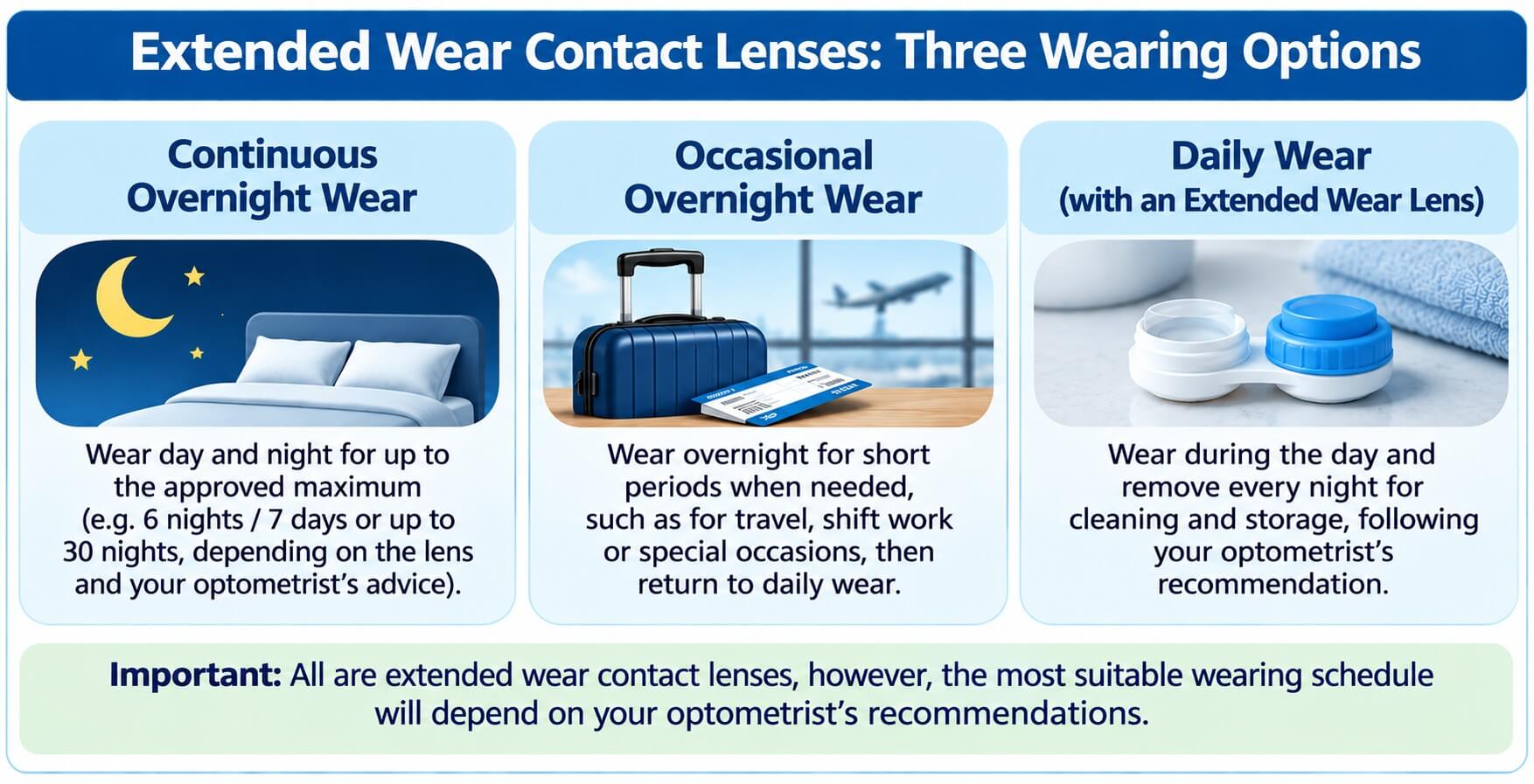
There are different wearing schedules available, and your optometrist will recommend the most suitable option based on your prescription, eye health, lifestyle, and how your eyes respond to overnight wear.
Continuous Overnight Wear
Some extended wear contact lenses are approved for up to 7 days of continuous wear, meaning you can sleep in the lenses for 6 nights, while others may be approved for up to 30 nights, depending on the particular lens.
For example, Biofinity is currently approved for up to 6 nights and 7 days of continuous wear, while Air Optix Night & Day Aqua and PureVision 2 have longer approved overnight-wearing schedules.
However, these are maximum approved periods that the lenses can be slept in. Your optometrist may recommend fewer nights or a shorter wearing schedule depending on your individual needs.
Occasional Overnight Wear
Not everyone who is prescribed extended wear contact lenses needs to sleep in them every night.
Some people may benefit from occasional overnight wear, particularly when travelling, working shifts or attending events where removing and cleaning lenses would be inconvenient.
Your optometrist can advise whether occasional overnight or continual wear is appropriate, and how frequently you should remove your lenses.
Daily Wear
Extended wear contact lenses can also be prescribed for daily wear, meaning they are removed each evening, cleaned and stored overnight.
This allows wearers to benefit from the silicone hydrogel material and other features of these lenses without sleeping in them.
For some people, daily removal may be the most appropriate option, even when the lens itself is approved for extended wear.
Remember: The replacement schedule and overnight-wearing schedule are not necessarily the same. A monthly replacement lens, for example, may need to be removed every evening or after a shorter period of continuous wear, depending on your optometrist's recommendation.
< >
Our Customers' Top 3 Extended Wear Contact Lenses
Extended wear contact lenses offer different features to suit individual prescriptions and wearing preferences. Here are three established contact lenses you can sleep in, available at ContactLenses.co.uk, each with its own benefits.
Biofinity
Biofinity contact lenses from CooperVision are made using Aquaform technology, which helps retain moisture while allowing high levels of oxygen to reach the eye. Designed for comfort and flexibility, these monthly replacement lenses can be worn for up to 6 nights and 7 days continuously, when prescribed for overnight wear by an optometrist. They can also be prescribed for daily wear, with removal and cleaning each evening.
PureVision 2 HD
PureVision 2 HD contact lenses from Bausch + Lomb feature High Definition Optics, designed to help reduce halos and glare, particularly in low-light conditions. Their thin silicone hydrogel design offers clear vision and high oxygen permeability. These lenses may be prescribed for extended wear for up to 30 days, depending on the product's approved schedule and your optometrist's recommendation.
Air Optix Night & Day Aqua
Air Optix Night & Day Aqua contact lenses from Alcon are specifically designed for extended wear. Made from highly oxygen-permeable silicone hydrogel, they feature a smooth surface designed to resist deposits and maintain comfort. When prescribed by an optometrist, these lenses are approved for up to 30 nights of continuous wear, making them an option for people who require a longer overnight-wearing schedule.
How Much Do Extended Wear Contact Lenses Cost?
Extended wear contact lenses can be more affordable than you might think, particularly when compared with daily disposable lenses. Our cheapest contact lenses that you can sleep in are PureVision 2 HD at just 35p per day!
For someone wearing lenses in both eyes, the approximate daily costs of three popular extended wear lenses are:
- Biofinity — 42p per day
- PureVision 2 HD — 35p per day
- Air Optix Night & Day Aqua — £1.10 per day
These costs assume monthly lens replacement over 30 days and exclude cleaning solutions, storage cases and professional fees.
When extended wear lenses are prescribed for continuous overnight wear, they may also reduce the need for contact lens solutions and storage cases, making them a cost-effective option for some wearers.
However, if your optometrist recommends occasional overnight wear or daily removal, you'll still need appropriate cleaning and storage products. The overall cost will therefore depend on your prescribed wearing schedule.
Best Extended Wear Contact Lenses for Different Needs
The best extended wear contact lenses for you will depend on your prescription, eye health, lifestyle and recommended wearing schedule. Some lenses offer particular features that may make them suitable for different needs, but your optometrist will help determine which option is right for your eyes.
Here are some of our recommended extended wear contact lenses for different requirements.
| Best For | Contact Lens | Why We Recommend It |
|---|---|---|
| Sensitive Eyes | Biofinity | Aquaform technology helps retain moisture and supports comfortable lens wear. |
| Dry Eyes | Air Optix Night & Day Aqua | Its highly oxygen-permeable silicone hydrogel material and smooth, deposit-resistant surface are designed to support comfortable lens wear. |
| Active Lifestyles | Air Optix Night & Day Aqua | Approved for longer periods of continuous wear when prescribed, offering flexibility for people with demanding schedules. |
| Best Value | Biofinity | An affordable monthly replacement lens that may reduce the need for solutions when prescribed for continuous wear. |
| Sport | PureVision 2 HD | High Definition Optics are designed to reduce halos and glare, which may be useful during sporting activities in challenging lighting conditions. |
All overnight-wear recommendations are subject to professional fitting and an individually prescribed wearing schedule.
Extended Wear Contact Lenses Compared with Daily and Monthly Lenses
Extended wear, daily disposable and monthly contact lenses all offer different benefits, particularly when it comes to convenience, cleaning and cost.
The main advantage of extended wear contact lenses is the option to sleep or nap in them when prescribed, reducing the need for daily lens removal and handling.
The table below compares the three wearing modes.
| Feature | Extended Wear | Daily Disposable | Monthly Disposable |
|---|---|---|---|
| Replacement schedule | Usually monthly, depending on the lens | Fresh pair every day | Every month |
| Can you sleep in them? | Yes* | No | No, unless the particular lens is approved and prescribed for overnight wear |
| Daily cleaning required? | No* | No | Yes |
| Overnight storage required? | No* | No | Yes |
| Convenience | No need for nightly removal* | Fresh lenses each day, no cleaning | Daily removal, cleaning and storage |
| Cost | Can be economical, particularly with reduced solution use | Generally higher for everyday wear | Often economical, with solution costs |
* When approved and prescribed for continuous overnight wear. Cleaning and storage requirements may differ for occasional overnight wear or daily removal.
Convenience and Flexibility
Extended wear lenses can be particularly convenient for people who work irregular hours, travel frequently, or would prefer not to remove their lenses every evening.
Daily disposables offer a different kind of convenience: a fresh pair each day without the need for cleaning or storage, and with less opportunity for deposits to build up. Monthly lenses require a daily care routine but can be a cost-effective option for regular wearers.
Cleaning and Care
When extended wear lenses are prescribed for continuous overnight wear, there is no need to remove, clean and store them every evening. However, if your optometrist recommends occasional overnight wear, a break night during the month, or daily removal, the lenses must be cleaned and stored appropriately whenever they are removed for reuse.
Daily disposable lenses are discarded after each use, while conventional monthly lenses need cleaning and storing overnight.
Getting the Best Out of Your Extended Wear Contact Lenses
Extended wear contact lenses offer convenience and flexibility, following the correct wearing and care routine is essential for keeping your eyes healthy.
To get the best out of your extended wear contact lenses:
- Follow your prescribed wearing schedule. Never exceed the number of nights recommended by your optometrist, even if your lenses are approved for longer continuous wear.
- Attend your aftercare appointments. These allow your optometrist to check how your eyes are responding to overnight wear.
- Cleaning after removal: If you remove your lenses and intend to reuse them, clean, disinfect and store them using the products and instructions recommended by your optometrist.
- Replace your lenses on time. Never extend the recommended replacement period, even if your lenses still feel comfortable.
- Avoid contact with water. Remove your lenses before swimming or showering, and never rinse or store them in tap water.
- Pay attention to changes in comfort or vision. If your eyes become uncomfortable or irritated, remove your lenses and seek advice from your optometrist before resuming wear.
Our Optometrist's Advice
Frequently Asked Questions
Can I Sleep in Extended Wear Contact Lenses?
Yes, extended wear contact lenses are designed to allow overnight wear, but only when your optometrist has confirmed they are suitable for your eyes and prescribed an appropriate wearing schedule. Not everyone can safely sleep in contact lenses, even those approved for extended wear.
How Long Can You Sleep in Contact Lenses?
Some extended wear contact lenses are approved for up to 6 nights and 7 days of continuous wear, while others are approved for up to 30 nights. The number of nights you can actually wear them depends on the particular lens and your optometrist's recommendation.
Are Extended Wear Contact Lenses Safe?
Extended wear contact lenses can be a suitable option for some people when professionally fitted and monitored. However, sleeping in contact lenses can increase the risk of eye infections compared with removing them before bed. Following your prescribed wearing schedule and attending regular aftercare appointments are important.
Can I Wear Extended Wear Contact Lenses During the Day Only?
Yes. Many extended wear lenses can also be prescribed for daily wear, meaning you remove, clean and store them each evening. This allows you to benefit from their silicone hydrogel materials and other lens features without sleeping in them.
Can I Wear My Normal Contact Lenses Overnight?
No, unless your particular lenses are approved for overnight wear and your optometrist has specifically prescribed them for that purpose. Sleeping in contact lenses that are not intended for overnight wear can increase the risk of serious eye complications.
Can You Get Extended Wear Contact Lenses for Astigmatism or Presbyopia?
Yes, some extended wear lenses are available in toric designs for astigmatism and multifocal designs for presbyopia. However, not every toric or multifocal lens is approved for overnight wear, so your optometrist will need to check which options are suitable.
