
30 Lenses per box
3 Lenses per box
6 Lenses per box
3 Lenses per box
30 Lenses per box
30 Lenses per box
30 Lenses per box
30 Lenses per box
3 Lenses per box
12 Lenses per box
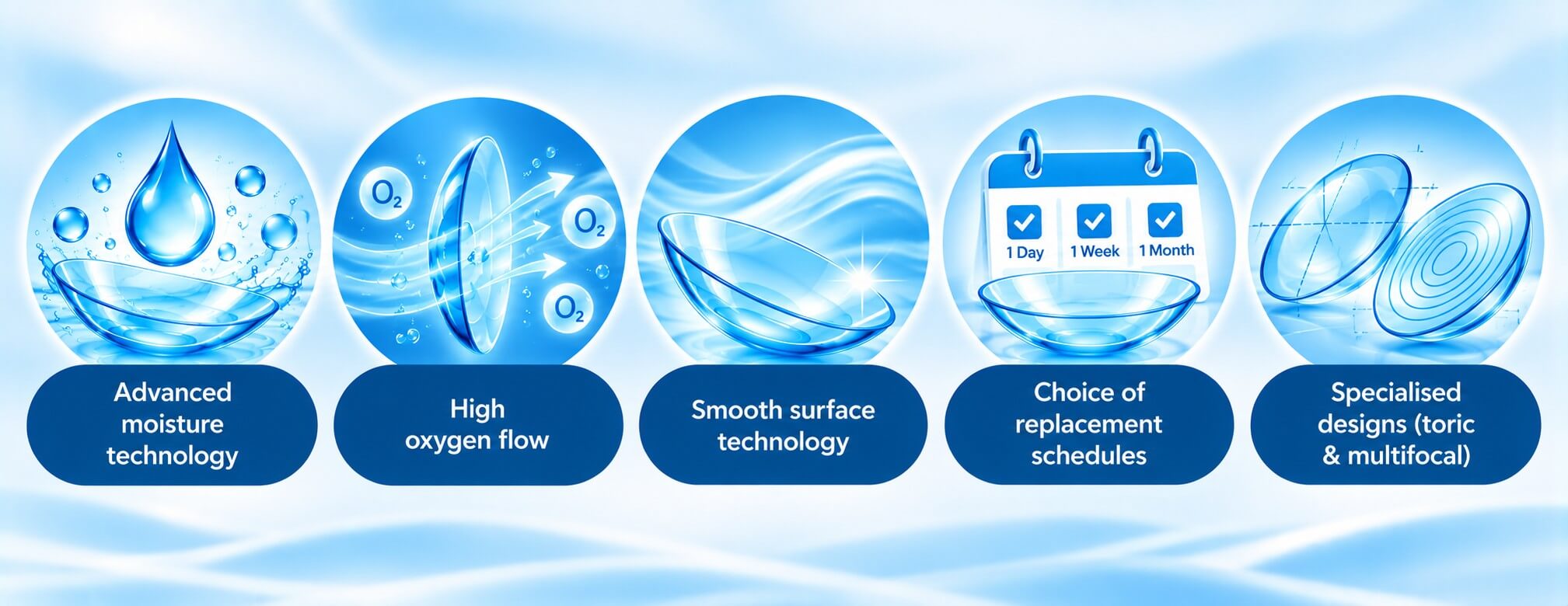
Premium contact lenses use some of the most advanced materials and technologies available to support comfort, breathability and consistent vision throughout the day. They may include silicone hydrogel materials, highly wettable surfaces, water-gradient technology or specialised designs developed for particular visual needs.
Paying more doesn't automatically make a contact lens better for your eyes, but premium lenses often come with newer materials, surface treatments or moisture technologies and are worth considering if you wear lenses for long days, experience end-of-day discomfort or would benefit from a particular lens technology.
The important thing is choosing a lens that suits your eyes, prescription and lifestyle — rather than simply choosing the most expensive option.
Premium contact lenses can offer some impressive technologies, particularly when it comes to surface moisture, oxygen transmission, and maintaining comfort over longer wearing periods. But a higher price doesn't automatically mean a lens will be more comfortable or suitable for your eyes.
If you're considering moving to a premium lens, your optometrist can look at what you're trying to improve — whether that's comfort, dryness, wearing time or vision — and recommend a lens with features that are genuinely useful for you.
John Dreyer BSc (Hons), MCOptom, DipCL
Optometrist & Clinical Content Reviewer
Price alone isn't a particularly useful way to judge a contact lens. Instead, look at what the lens actually offers.
Advanced moisture technology can help maintain a wettable, comfortable lens surface. Some lenses use water-gradient designs, while others incorporate wetting agents or technologies intended to support surface moisture throughout the wearing period.
Silicone hydrogel materials allow high levels of oxygen to pass through the lens, making them a common feature of many modern premium lenses.
Surface technology can also matter. A smooth, highly wettable lens surface may help reduce friction between the lens, tear film and eyelids during blinking.
Premium lenses are available in daily, weekly and monthly replacement schedules, so choosing a premium lens doesn't necessarily mean choosing a daily disposable.
For people with astigmatism or presbyopia, advanced toric and multifocal designs can provide more specialised vision correction.
Dailies Total1 – One of the clearest examples of a premium daily disposable. It combines a breathable silicone hydrogel core with Water Gradient Technology, creating a very high-water surface designed to provide a soft, moisture-rich interface with the eye.
ACUVUE OASYS 1-Day with HydraLuxe – A premium silicone hydrogel daily lens using HydraLuxe Technology. It is a strong option for people who want a fresh daily lens combined with technology designed around demanding modern lifestyles.
Precision1 – Uses SMARTSURFACE Technology, with a thin moisture-rich layer at the lens surface, combined with a silicone hydrogel core. It provides a useful step into premium surface technology without necessarily moving to the very top end of daily-lens pricing.
MyDay Daily Disposable – A modern silicone hydrogel daily disposable combining high oxygen transmission with a relatively soft, flexible lens material. A good premium option for wearers who prioritise breathability and everyday comfort.
Precision7 – A newer weekly silicone hydrogel lens using Alcon's ACTIV-FLO System. A wetting agent is incorporated into the lens while a replenishing agent is gradually released during wear, with the technology designed to maintain a smooth, hydrated surface throughout the seven-day replacement cycle.
ACUVUE OASYS – A well-established two-weekly silicone hydrogel lens. It remains a strong option for people who prefer reusable lenses but want a breathable material and moisture-focused lens technology.
TOTAL30 – Brings Alcon's water-gradient approach to a reusable monthly lens. It is an interesting option for wearers who like the concept behind the Total family but prefer a monthly replacement schedule. TOTAL30 is also available in toric and multifocal designs.
Biofinity – A well-established premium silicone hydrogel monthly lens using CooperVision's Aquaform Technology. It combines high oxygen transmission with a naturally wettable material and remains a strong option for regular monthly-lens wearers.
Air Optix plus HydraGlyde – Combines HydraGlyde Moisture Matrix Technology with SmartShield surface technology. The former is designed to support lens-surface moisture, while SmartShield helps protect the lens surface against deposits during the monthly wearing cycle.
Don't choose a premium contact lens because it has the longest list of technologies on the box.
Think about what you actually want to improve. If your current lenses become dry late in the day, moisture and surface technology may be particularly relevant. If you wear lenses for long hours, breathability may be important.
If your existing lenses already give you clear, comfortable vision all day, changing to a more expensive lens may offer little practical benefit. The best premium lens is the one whose features provide a benefit you can actually use.
Not necessarily. Premium lenses often contain newer materials, surface treatments or moisture technologies, but a less expensive lens can still provide excellent vision and comfort if it suits your eyes.
The important comparison is what the lens offers and whether you benefit from those features, rather than price alone.
They can be, particularly if the technology addresses something that affects your comfort. A moisture-rich surface, highly breathable material or smoother lens surface may benefit some wearers.
However, comfort is individual. An expensive lens that doesn't fit or suit your eyes won't automatically be more comfortable than a lower-cost alternative.
No. Some of the most technologically advanced lenses are daily disposables, but premium weekly, two-weekly and monthly lenses are also available.
Daily disposables do have the advantage of giving you a fresh lens every day, without the need for cleaning or storage.
Some premium lenses include moisture-retaining, water-gradient or surface technologies that may help people who experience contact-lens dryness.
But dry-eye symptoms have different causes. If your lenses regularly feel dry or uncomfortable, your optometrist can assess the reason rather than simply assuming a more expensive lens will solve it.
They can be if their additional features make a meaningful difference to your vision, comfort or wearing time.
If you're already comfortable in a lower-cost lens and can wear it successfully for as long as you need, there may be little reason to change. Premium contact lenses should offer you useful additional technology, not simply a higher price.
Possibly, but don't switch simply by matching the power, base curve and diameter printed on the box.
Different lens materials and designs can fit and behave differently on the eye. If you'd like to try a premium lens, speak to your optometrist so an appropriate alternative can be fitted and assessed.
