
Cleaning a contact lens case -Video
The Importance Of Cleaning A Contact Lens Case
Contact lenses provide a means to improve and sharpen your vision without having to worry about losing your glasses or the bulkiness that comes with using them. If you wear two weekly, or monthly disposable lenses it is important not to neglect your contact lens case.
To maintain healthy eyes and to extend the lifespan of your contact lenses, proper care is important, and maintenance of the contact lens case plays a major role. A contaminated lens case can lead to eye infections, damage your contact lenses, or reduce their lifespan, so cleaning it regularly cannot be overestimated.
Here is our optometrists' guide on how you should clean your contact lens case:
Our Optometrist's Advice
“Contact lens wearers often concentrate on keeping their lenses clean, but the lens case is an important part of the hygiene routine too. After each use, empty the old solution, rub and rinse the case with fresh contact lens solution, and allow it to dry upside down with the caps off.
Never use water to clean your lens case or top up old solution, and replace the case at least every three months, or as directed by your optometrist.”
John Dreyer BSc (Hons), MCOptom, DipCL
Optometrist & Clinical Content Reviewer
1. Clean Your Contact Lens Case After Every Use
Once you have removed your contact lenses from the case:
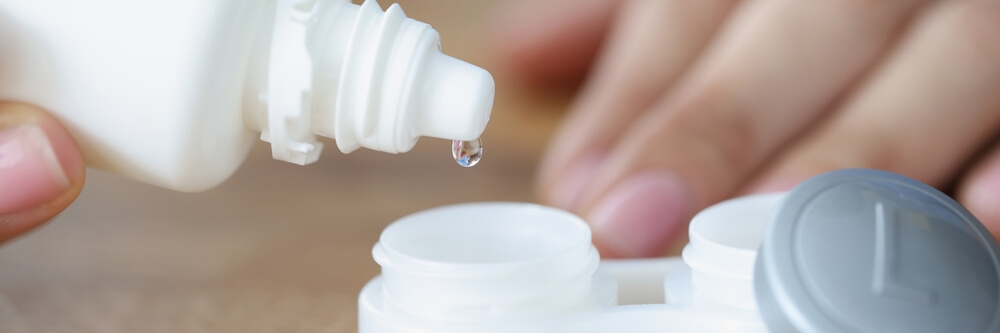
Empty the old solution: Discard all the used solution from the case. Never reuse contact lens solution or “top off” old solution with fresh solution.
Rub and rinse the case: Using clean fingers, rub the inside of the case and rinse it with fresh contact lens disinfecting solution. Never use tap, bottled or distilled water to clean your lens case.
Empty the case: Shake out any remaining solution.
Allow it to dry: Leave the clean case upside down on a fresh, clean tissue with the caps off so that it can dry thoroughly before it is used again.
Always follow the instructions supplied with your particular contact lens solution and case.
3. Monthly Replacement
While proper cleaning can significantly reduce the risk of contamination, wear and tear on the lens case itself can create small crevices or gaps where bacteria can hide and grow. To keep your eyes as healthy as possible, you should consider replacing your lens case every month, at least once every three months, or sooner if recommended by your optometrist or the case manufacturer. Many bottles of contact lens solutions include a free case in the packaging, making regular replacements easy and cost-effective.
Important: If you use a hydrogen peroxide contact lens care system, use only the special case supplied or specified for that system and replace it according to the manufacturer's instructions. These cases are part of the neutralisation process and are not interchangeable with ordinary contact lens cases.
4. Avoid Common Mistakes
- Never use water: Do not rinse your case with tap, bottled or distilled water. Use fresh contact lens disinfecting solution.
- Never top off old solution: Empty the case completely before adding fresh solution. Mixing new solution with used solution reduces the effectiveness of disinfection.
- Don't reuse solution: Always use fresh disinfecting solution when storing reusable contact lenses.
- Allow the case to dry properly: After cleaning, store the case upside down on a fresh, clean tissue with the caps off.
- Use the correct solution: Follow the care system recommended for your particular lenses. Saline and rewetting drops are not substitutes for disinfecting solution.
5. Travel Tips
If you're on the move, you should consider buying a travel-sized contact lens solution and case.
Travel-sized bottles of contact lens solution can be convenient, always use a commercially packaged travel-size product rather than transferring solution from a larger bottle into a smaller container. Decanting solution can compromise its sterility.
If taking your regular solution and case with you, give your case a thorough cleaning before you travel, and once you reach your destination, make sure you maintain your regular cleaning routine.
Good lens-case hygiene is just as important when you're away from home. Pack enough contact lens solution for your trip, together with a clean case and a pair of backup glasses.
6. Watch For Signs Of Contamination
Sometimes, despite your best efforts, the case can become contaminated.
Don't wait for your regular replacement date if your contact lens case becomes damaged, cracked or visibly dirty, or if you are concerned that it may have become contaminated. Replace it with a new case and continue following your normal cleaning routine.
If you develop eye pain, unusual redness, blurred vision or persistent discomfort, remove your contact lenses and contact your optometrist promptly. These symptoms can be associated with contact lens complications and should not simply be treated by cleaning or replacing the case.
Conclusion
A clean contact lens case is essential when it comes to maintaining healthy eyes. While the steps might seem boring initially, they will quickly become a part of your daily routine. With just a few minutes each day and an extra few minutes for a more thorough clean once a week, you can reduce the risks of contamination and infections.
The last word from our optometrist, "Many contact lens wearers focus on keeping their lenses clean but forget that the lens case also needs regular care. A contaminated case can quickly transfer harmful microorganisms back onto otherwise clean lenses. Emptying the old solution, allowing the case to air dry, and replacing it every month are simple habits that can significantly reduce your risk of eye infections."