Anti reflection coating explained
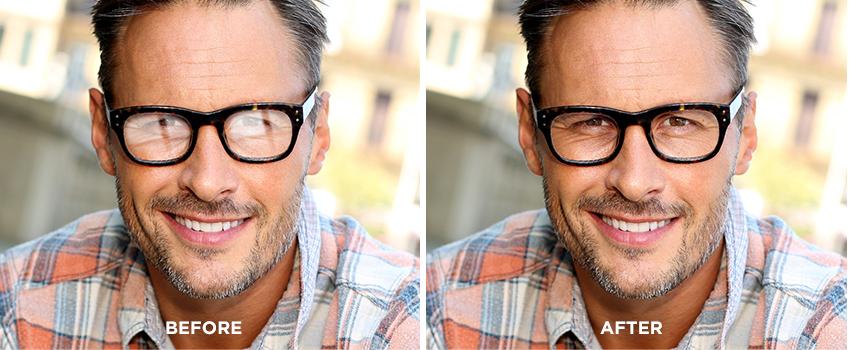
Get the most out of your glasses by choosing lenses with an anti-reflection coating. It's not just your glasses that can be coated with this in order to help your eyes… You can also add it to screens and cameras! Here’s what an anti-reflection (AR) coating is and how it works…
Defining Anti-Reflection Coatings
An anti-reflection (AR) coating is a thin layer of material applied to the surface of optical components, such as lenses, glass panels, and displays, with the primary purpose of minimising the reflection of light.
The Mechanics Of Anti-Reflection Coatings
Imagine looking at a piece of glass and when light interacts with the surface of the glass, some light will naturally reflect off of it. The intensity of these reflections can vary depending on factors like the angle of incidence and the refractive indices of the materials involved.
Anti-reflection coatings work by manipulating the behaviour of light as it transitions from one medium (such as air) to another (such as glass). This transition causes a portion of the incident light to be reflected at the interface due to the difference in refractive indices. The goal of the AR coating is to minimise these reflections by carefully engineering the thickness and refractive index of the coating material.
Key Features And Mechanisms Of AR Coatings
• Interference: AR coatings are designed to create a phase difference between the reflected waves from the surface of the coated material and the reflected waves from the underlying substrate. This phase difference can lead to destructive interference which essentially causes the reflected waves to cancel each other out and reduces overall reflection in the end.
• Multilayer Design: Most anti-reflection coatings consist of multiple layers with varying refractive indices. By strategically selecting the thickness and refractive index of each layer, the coating can be optimised to reduce reflections across a specific range of wavelengths. This then leads to enhanced performance across different lighting conditions.
• Index Matching: The refractive index of the AR coating is often chosen to be somewhere between the refractive indices of the surrounding medium and the substrate material. This index matching minimises the abrupt change in the refractive index at the interface, reducing the intensity of reflected light.
• Gradient Index: Some advanced AR coatings utilise a gradient refractive index profile, meaning that the refractive index gradually changes from the air side to the substrate side. This gradual transition further minimises reflection by reducing abrupt changes in the path of light.
• Broadband Performance: Anti-reflection coatings are made to work across multiple wavelengths so vision stays clear in bright light, low light and everything in between. The result is a steady, reliable viewing experience no matter what device you’re using.
Benefits of AR Coatings on Glasses
• Sharper Visuals: With less glare bouncing off the lenses, what you see looks cleaner and more defined. Colours stand out better and small details are easier to pick up.
• Reduced Eye Strain: AR lenses make it more comfortable to look at screens and bright environments for longer. You don’t have to squint or constantly adjust your eyes to deal with reflections.
• Improved Aesthetics: Glasses with AR coating look better. The lenses appear clearer, your eyes are easier to see and there are fewer distracting reflections getting in the way.
• Gradient Index: Some advanced AR coatings use a gradual refractive index that shifts from the air side to the lens surface, helping light pass through more smoothly and minimising reflections.
• Reduced Reflections: An AR coating on your glasses reduces the light being reflected off the lens, which can mean others can see your eyes more clearly. This can be particularly important in the film industry where the reflected light from glasses can obscure the actor or newsreader's eyes.
Anti-reflective coatings won't change the look of your glasses but they can change the way you look at the world and the world looks at you. The revolutionary technology behind the coating allows you to see the world as though you were glasses-free. You deserve to see the benefits yourself… try them today!